
Ace Physiotherapy and Sports in Singapore
-
Chat With Us
+65 81535374 -
ACE PHYSIO SPORTS
East gate Building, 46 East Coast Road
#08-03 Singapore 428766 -
Opening Hours
Mon to Fri: 08:00am - 8:00pm -
Opening Hours
Sat: 08:00am - 4:00pm
Sunday (By prior appointment)


- Home
- What We Treat
- Musculoskeletal
- Conditions
- Head
- Neck
- Acute Nerve Root Pain
- Apophyseal Wry Neck
- Broken neck
- Cervical Rib Syndrome
- Cervical Radiculopathy
- Cervical Spondylolythesis
- Cervical Spondylosis
- Cervical Stenosis
- Degenerative Neck Pain
- Discogenic Wry Neck
- Fractured Vertebrae
- Herniated Disc
- Neck Muscular Strain
- Neck Pain
- Neck Slipped Disc
- Postural Kyphosis
- Postural Neck Pain
- Stiff Neck
- Torticollis
- Whiplash
- Shoulder
- Adhesive Capsulitis
- AC Joint Injury
- AC Joint osteolysis
- Calcific Tendinopathy of the Rotator Cuff
- Dislocation of the Shoulder Joint
- Fracture of the Clavicle
- Fractured Humerus
- Frozen Shoulder
- Labral Tear
- Levator Scapulae Syndrome
- Muscle Imbalance
- Nerve Disorders of the Shoulder
- Nerve Entrapments Around the Shoulder
- Referred Pain
- Rotator Cuff Tendinopathy
- Rotator Cuff Tear
- Shoulder Impingement
- Shoulder Instability
- Thoracic Outlet Syndrome
- Winging Scapula
- Upper Arm
- Elbow
- Forearm
- Wrist
- Carpal Tunnel Syndrome
- De Quervain’s Tenosynovitis
- Fracture of the Distal Radius & Ulna
- Fracture of the Scaphoid
- Injury to the Distal Radial Epiphysis
- Osteoarthritis of the Wrist
- Scapholunate Dissociation
- Triangular Fibrocartilage Complex Tear
- Ulnar Nerve Compression at the Wrist
- Wrist Fracture
- Wrist Strain
- Wrist Tendinopathy
- Hand
- Broken Finger
- Crush Injury
- Dislocated Finger
- Duprytren’s Contracture
- Finger Sprain
- Fractured Thumb
- Fracture of the Hook of Hamate
- Hyperextension Injury
- Ligament Injuries in the Fingers
- Metacarpal Fracture
- Nerve Injury
- Osteoarthritis of the Hand
- Referred Pain
- Skier’s Thumb
- Tendon Injury
- Trigger Finger
- Upper Back
- Lower Back
- Buttock
- Chest
- Abdominals
- Pelvis
- Hip
- Groin
- Upper Leg
- Avulsion Fracture of the Ischial Tuberosity
- Dead Leg
- Fractured Femur
- Hamstring Origin Tendinopathy
- Iliotibial Band Syndrome
- Myositis Ossificans
- Pulled Hamstring
- Pulled Quadricep Muscle
- Referred Pain
- Ruptured Hamstring
- Ruptured Quadricep
- Sciatica
- Stress Fracture of the Femur
- Upper Leg Compartment Syndrome
- Knee
- Knee Ligament Injury
- Anterior Cruciate Ligament Rupture
- Anterior Cruciate Ligament Tear
- Calcification of the Medial Collateral Ligament
- Knee Ligament Injury
- Lateral Collateral Ligament Tear
- Medial Collateral Ligament Tear
- Multiple Ligament Injury
- Posterior Cruciate Ligament Tear
- Posterior Cruciate Ligament Rupture
- Posterior Corner Knee Injury
- Patella Conditions
- Knee Tendinopathy
- Chondral Defects
- Fracture of the Femoral Condyles
- Fracture of the Tibial Plateau
- Iliotibial Band Syndrome
- Knee Cartilage Injury
- Meniscal Tear
- Osgood Schlatter’s Disease
- Osteoarthritis of the Knee
- Osteochondritis Dissecans
- Pain at the Front of the Knee
- Pes Anserinus Bursitis
- Popliteus Strain
- Referred Pain
- Ruptured Hamstring Tendon
- Sciatica
- Superior Tibiofibular Joint Injury
- Swimmer’s Knee
- Knee Ligament Injury
- Lower Leg
- Ankle
- Achilles Tendonitis
- Ankle Instability
- Ankle Ligament Injury
- Anterior Impingement Syndrome
- Avulsion Fracture of the Base of the Fifth Metatarsal
- Complete Tear of the Achilles Tendon
- Dislocation of the Peroneal Tendons
- Flexor Hallucis Longus Tendinopathy
- Footballer’s Ankle
- Fractured Ankle
- Inferior Tibiofibular Joint Injury
- Osteoarthritis of the Ankle
- Osteochondral Fracture of the Talar Dome
- Paratendinopathy of the Achilles Tendon
- Partial Tear of the Achilles Tendon
- Peroneal Tendinopathy
- Posterior Impingement Syndrome
- Retrocalcaneal Bursitis
- Sciatica
- Sever’s Disease
- Sinus Tarsi Syndrom
- Sprained Ankle
- Stress Fracture of the Medial Malleolus
- Stress Fracture of the Talus
- Tarsal Tunnel Syndrome
- Tibialis Anterior Tendinopathy
- Tibialis Posterior Tendinopathy
- Foot
- Accessory Navicular Syndrome
- Big Toe Sprain
- Biomechanical Foot Pain
- Bunions
- Extensor Tendinopathy
- Fat Pad Contusion
- Fractures of the Fifth Metatarsal
- Hallux Rigidus
- Lisfranc Injury
- Medial Plantar Neuropraxia
- Metatarsalgia
- Midtarsal Joint Sprain
- Morton’s Neuroma
- Osteoarthritis of the Foot
- Osteochondral Lesions of the Talus
- Os Trigonum Syndrome
- Plantar Fasciitis
- Sciatica
- Sesamoid Injury
- Sesamoiditis
- Stress Fracture of the Calcaneus
- Stress Fracture of the Metatarsal
- Stress Fracture of the Navicular
- Turf Toe
- Symptoms
- Abnormal Reflexes
- Balance Problems
- Biomechanical Problems
- Coordination Problems
- Cramps
- Deformity
- Falls
- Fatigue
- Gait problems
- Headaches
- Hypermobility
- Immobility
- Joint Clicking
- Joint Instability
- Joint Locking
- Mobility Problems
- Movement Disorders
- Numbness
- Pain
- Reduced Range of Movement
- Sensory Problems
- Shortness of Breath
- Spasm
- Stiffness
- Swelling / Inflammation
- Tingling / Pins & Needles
- Weakness
- Conditions
- Sports Injuries
- Postoperative Orthopaedic
- Shoulder
- Anterior Inferior Capsular Shift
- AC Joint / Clavicle Excision
- AC Joint Stabilisation
- Arthroscopy
- Bankart Repair / Anterior Stabilisation
- Biceps Tendon Repair
- Capsular Shrinkage
- Fractured Clavicle Fixation
- Fractured Humerus Fixation
- Frozen Shoulder Release – Arthroscopic Release of the Coraco-Humeral Ligament
- Hemiarthroplasty
- Long Thoracic Nerve Release
- Mobilisation Under Anaesthetic MUA
- Rotator Cuff Surgery (Repair & Debridement)
- Shoulder Replacement
- SLAP Repair
- Steroid Injection of the Shoulder
- Sub Acromial Decompression
- Neck
- Upper Arm
- Forearm
- Elbow
- Upper Back
- Lower Back
- Buttock
- Pelvis
- Hip
- Groin
- Ankle
- Foot
- Knee
- Anterior Cruciate Ligament (ACL)
- Arthroscopy
- Knee Fusion
- Knee Replacement
- Lateral Collateral Ligament (LCL)
- Lateral Release
- Medial Collateral Ligament (MCL)
- Meniscus Repair
- Meniscus Replacement / Transplant
- Meniscectomy
- Micro-Fracture of an Osteochondral Lesion
- Multi Ligament Surgery
- ORIF Patella
- Osteotomy
- Partial Knee Resurfacing
- Patella Stabilisation
- Patella Tendon Repair
- Patellar Alignment Surgery
- Patellectomy
- Posterior Corner Reconstruction
- Posterior Cruciate Ligament (PCL)
- Tibial Plateau Fracture
- Shoulder
- Neurological
- Chronic Pain/Fatigue
- Amputees
- Rheumatology
- Women’s Health
- Respiratory
- Cardiovascular
- Elderly
- Oncology
- Men’s Health
- Vestibular
- Musculoskeletal
- Gallery
- About
Biceps Tendon Repair
Biceps Tendon Repair (Tenodesis)
Biceps tendon repair, also known as tenodesis, is an arthroscopic (keyhole) surgical procedure carried out to reattach a ruptured biceps tendon. The biceps muscle, located at the front of the upper arm, plays a key role in elbow flexion and forearm supination (turning the palm upward). The muscle is connected to the shoulder and elbow by tendons and has two points of origin:
- Long head of the biceps – arises from the supraglenoid tubercle of the scapula and the superior labrum.
- Short head of the biceps – arises from the coracoid process of the scapula (a bony prominence at the front of the shoulder).
Both muscle heads merge into a single tendon attachment at the radial tuberosity of the elbow.
Among these, the long head of the biceps is the most vulnerable to injury and rupture.
- 1. Progressive Rupture (Degenerative):
Over time, repetitive activities can cause partial tearing and inflammation (biceps tendonitis) of the long head tendon. In severe cases, this leads to a complete rupture. The tendon slips downward, producing a distinctive “Popeye” deformity when the muscle contracts. This type of rupture is more common in older adults, often associated with rotator cuff tears. Surgery is usually not required if daily function remains unaffected. -
2. Traumatic Rupture (Acute):
A sudden, forceful load on the biceps (e.g., heavy lifting) may cause the tendon to rupture instantly. Patients often report a popping sound, followed by sharp pain, swelling, bruising, and the characteristic Popeye sign. In such cases, biceps tenodesis surgery is typically performed to reattach the torn tendon and restore strength.
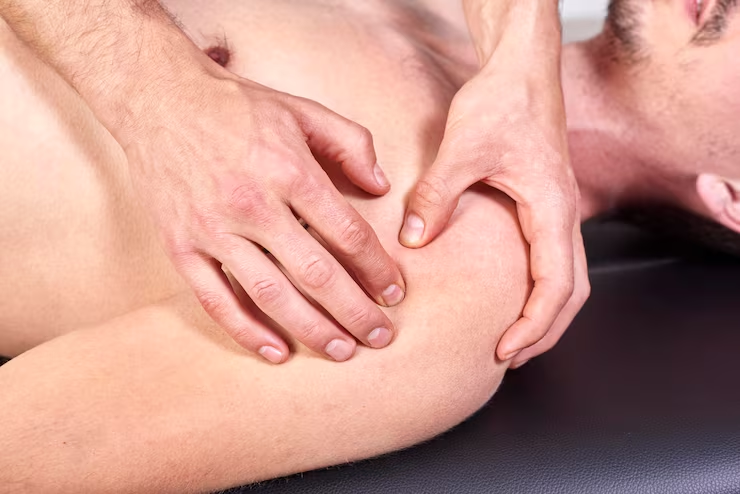
Symptoms Following Biceps Tendon Repair
After surgery, your arm will typically be supported in a protective sling for up to 3 weeks. This helps safeguard the repair and encourages proper healing. During this phase, your surgeon will guide you on the safe amount of movement and permitted daily activities. Common post-operative symptoms include:
- Pain
- Stiffness
- Swelling
- Bruising
Physiotherapy Following Biceps Tendon Repair
Rehabilitation is a vital part of recovery after biceps tendon repair Acephysiosports.com provides a structured programme tailored to your individual needs, focusing on reducing symptoms, restoring movement, and rebuilding strength.
Weeks 1–3
Early physiotherapy is aimed at minimising complications, managing pain, and gently introducing controlled movement. Treatment may include:
- Pain management techniques
- Postural education
- Scapular setting exercises
- Elbow, wrist, and hand range of movement and strengthening
- Passive range of motion for the elbow and shoulder
- Gradual introduction of active elbow and shoulder exercises
- Education and recovery advice
Weeks 4–6
During this stage, you will begin to move out of the sling and increase shoulder and arm mobility. Strengthening is gradually introduced, alongside exercises to restore normal biomechanics. Treatment may include:
- Active range of motion for shoulder and elbow
- Continued scapular setting
- Early rotator cuff strengthening
- Introduction of isolated biceps strengthening
- Kinetic chain control exercises
- Proprioceptive (stability and coordination) training
- Soft tissue release
- Scar management
Weeks 7–12
Rehabilitation becomes more advanced, with focus on restoring full range of motion, strength, and endurance. Treatment may include:
- Active range of movement to achieve full elbow and shoulder mobility
- Stretching and flexibility work
- Progressive biceps strengthening, including eccentric training
- Advanced scapular stabilisation
- Open chain strengthening exercises
- Sports- and function-specific training
- Advanced proprioceptive drills
- Long-term shoulder and arm conditioning
By the end of 12 weeks, most patients will have regained full movement, improved muscular strength, endurance, and control. At this point, you should be able to return to daily activities, sport, or occupational tasks. acephysiosports.com will also provide a long-term management plan to maintain improvements and support personal fitness or performance goals.
Summary
Biceps tendon repair (biceps tenodesis) is a common surgical treatment for tendon rupture, whether caused by age-related degeneration or traumatic injury. A rupture can significantly affect functional, sporting, and work activities, making surgical repair and structured rehabilitation essential. With a personalised physiotherapy programme from Acephysiosports.com, patients can achieve full recovery of movement, strength, and arm function, supporting a safe and confident return to activity.
To arrange an assessment with AcephysioSports.com, please contact us or call +65 8153 5374. Alternatively, you can book an appointment online today!
Get treated today!
We have immediate appointments available today. Contact us to make an appointment.
Find out more »
We are open...
Our clinics are open:
Mon - Fri: 8am - 8pm
Sat: 8am - 4pm
Sun: On Appointment Basis
Find your nearest clinic
Acephysio Sports have clinics located throughout the Singapore.
Find out more »

