
Ace Physiotherapy and Sports in Singapore
-
Chat With Us
+65 81535374 -
ACE PHYSIO SPORTS
East gate Building, 46 East Coast Road
#08-03 Singapore 428766 -
Opening Hours
Mon to Fri: 08:00am - 8:00pm -
Opening Hours
Sat: 08:00am - 4:00pm
Sunday (By prior appointment)


- Home
- What We Treat
- Musculoskeletal
- Conditions
- Head
- Neck
- Acute Nerve Root Pain
- Apophyseal Wry Neck
- Broken neck
- Cervical Rib Syndrome
- Cervical Radiculopathy
- Cervical Spondylolythesis
- Cervical Spondylosis
- Cervical Stenosis
- Degenerative Neck Pain
- Discogenic Wry Neck
- Fractured Vertebrae
- Herniated Disc
- Neck Muscular Strain
- Neck Pain
- Neck Slipped Disc
- Postural Kyphosis
- Postural Neck Pain
- Stiff Neck
- Torticollis
- Whiplash
- Shoulder
- Adhesive Capsulitis
- AC Joint Injury
- AC Joint osteolysis
- Calcific Tendinopathy of the Rotator Cuff
- Dislocation of the Shoulder Joint
- Fracture of the Clavicle
- Fractured Humerus
- Frozen Shoulder
- Labral Tear
- Levator Scapulae Syndrome
- Muscle Imbalance
- Nerve Disorders of the Shoulder
- Nerve Entrapments Around the Shoulder
- Referred Pain
- Rotator Cuff Tendinopathy
- Rotator Cuff Tear
- Shoulder Impingement
- Shoulder Instability
- Thoracic Outlet Syndrome
- Winging Scapula
- Upper Arm
- Elbow
- Forearm
- Wrist
- Carpal Tunnel Syndrome
- De Quervain’s Tenosynovitis
- Fracture of the Distal Radius & Ulna
- Fracture of the Scaphoid
- Injury to the Distal Radial Epiphysis
- Osteoarthritis of the Wrist
- Scapholunate Dissociation
- Triangular Fibrocartilage Complex Tear
- Ulnar Nerve Compression at the Wrist
- Wrist Fracture
- Wrist Strain
- Wrist Tendinopathy
- Hand
- Broken Finger
- Crush Injury
- Dislocated Finger
- Duprytren’s Contracture
- Finger Sprain
- Fractured Thumb
- Fracture of the Hook of Hamate
- Hyperextension Injury
- Ligament Injuries in the Fingers
- Metacarpal Fracture
- Nerve Injury
- Osteoarthritis of the Hand
- Referred Pain
- Skier’s Thumb
- Tendon Injury
- Trigger Finger
- Upper Back
- Lower Back
- Buttock
- Chest
- Abdominals
- Pelvis
- Hip
- Groin
- Upper Leg
- Avulsion Fracture of the Ischial Tuberosity
- Dead Leg
- Fractured Femur
- Hamstring Origin Tendinopathy
- Iliotibial Band Syndrome
- Myositis Ossificans
- Pulled Hamstring
- Pulled Quadricep Muscle
- Referred Pain
- Ruptured Hamstring
- Ruptured Quadricep
- Sciatica
- Stress Fracture of the Femur
- Upper Leg Compartment Syndrome
- Knee
- Knee Ligament Injury
- Anterior Cruciate Ligament Rupture
- Anterior Cruciate Ligament Tear
- Calcification of the Medial Collateral Ligament
- Knee Ligament Injury
- Lateral Collateral Ligament Tear
- Medial Collateral Ligament Tear
- Multiple Ligament Injury
- Posterior Cruciate Ligament Tear
- Posterior Cruciate Ligament Rupture
- Posterior Corner Knee Injury
- Patella Conditions
- Knee Tendinopathy
- Chondral Defects
- Fracture of the Femoral Condyles
- Fracture of the Tibial Plateau
- Iliotibial Band Syndrome
- Knee Cartilage Injury
- Meniscal Tear
- Osgood Schlatter’s Disease
- Osteoarthritis of the Knee
- Osteochondritis Dissecans
- Pain at the Front of the Knee
- Pes Anserinus Bursitis
- Popliteus Strain
- Referred Pain
- Ruptured Hamstring Tendon
- Sciatica
- Superior Tibiofibular Joint Injury
- Swimmer’s Knee
- Knee Ligament Injury
- Lower Leg
- Ankle
- Achilles Tendonitis
- Ankle Instability
- Ankle Ligament Injury
- Anterior Impingement Syndrome
- Avulsion Fracture of the Base of the Fifth Metatarsal
- Complete Tear of the Achilles Tendon
- Dislocation of the Peroneal Tendons
- Flexor Hallucis Longus Tendinopathy
- Footballer’s Ankle
- Fractured Ankle
- Inferior Tibiofibular Joint Injury
- Osteoarthritis of the Ankle
- Osteochondral Fracture of the Talar Dome
- Paratendinopathy of the Achilles Tendon
- Partial Tear of the Achilles Tendon
- Peroneal Tendinopathy
- Posterior Impingement Syndrome
- Retrocalcaneal Bursitis
- Sciatica
- Sever’s Disease
- Sinus Tarsi Syndrom
- Sprained Ankle
- Stress Fracture of the Medial Malleolus
- Stress Fracture of the Talus
- Tarsal Tunnel Syndrome
- Tibialis Anterior Tendinopathy
- Tibialis Posterior Tendinopathy
- Foot
- Accessory Navicular Syndrome
- Big Toe Sprain
- Biomechanical Foot Pain
- Bunions
- Extensor Tendinopathy
- Fat Pad Contusion
- Fractures of the Fifth Metatarsal
- Hallux Rigidus
- Lisfranc Injury
- Medial Plantar Neuropraxia
- Metatarsalgia
- Midtarsal Joint Sprain
- Morton’s Neuroma
- Osteoarthritis of the Foot
- Osteochondral Lesions of the Talus
- Os Trigonum Syndrome
- Plantar Fasciitis
- Sciatica
- Sesamoid Injury
- Sesamoiditis
- Stress Fracture of the Calcaneus
- Stress Fracture of the Metatarsal
- Stress Fracture of the Navicular
- Turf Toe
- Symptoms
- Abnormal Reflexes
- Balance Problems
- Biomechanical Problems
- Coordination Problems
- Cramps
- Deformity
- Falls
- Fatigue
- Gait problems
- Headaches
- Hypermobility
- Immobility
- Joint Clicking
- Joint Instability
- Joint Locking
- Mobility Problems
- Movement Disorders
- Numbness
- Pain
- Reduced Range of Movement
- Sensory Problems
- Shortness of Breath
- Spasm
- Stiffness
- Swelling / Inflammation
- Tingling / Pins & Needles
- Weakness
- Conditions
- Sports Injuries
- Postoperative Orthopaedic
- Shoulder
- Anterior Inferior Capsular Shift
- AC Joint / Clavicle Excision
- AC Joint Stabilisation
- Arthroscopy
- Bankart Repair / Anterior Stabilisation
- Biceps Tendon Repair
- Capsular Shrinkage
- Fractured Clavicle Fixation
- Fractured Humerus Fixation
- Frozen Shoulder Release – Arthroscopic Release of the Coraco-Humeral Ligament
- Hemiarthroplasty
- Long Thoracic Nerve Release
- Mobilisation Under Anaesthetic MUA
- Rotator Cuff Surgery (Repair & Debridement)
- Shoulder Replacement
- SLAP Repair
- Steroid Injection of the Shoulder
- Sub Acromial Decompression
- Neck
- Upper Arm
- Forearm
- Elbow
- Upper Back
- Lower Back
- Buttock
- Pelvis
- Hip
- Groin
- Ankle
- Foot
- Knee
- Anterior Cruciate Ligament (ACL)
- Arthroscopy
- Knee Fusion
- Knee Replacement
- Lateral Collateral Ligament (LCL)
- Lateral Release
- Medial Collateral Ligament (MCL)
- Meniscus Repair
- Meniscus Replacement / Transplant
- Meniscectomy
- Micro-Fracture of an Osteochondral Lesion
- Multi Ligament Surgery
- ORIF Patella
- Osteotomy
- Partial Knee Resurfacing
- Patella Stabilisation
- Patella Tendon Repair
- Patellar Alignment Surgery
- Patellectomy
- Posterior Corner Reconstruction
- Posterior Cruciate Ligament (PCL)
- Tibial Plateau Fracture
- Shoulder
- Neurological
- Chronic Pain/Fatigue
- Amputees
- Rheumatology
- Women’s Health
- Respiratory
- Cardiovascular
- Elderly
- Oncology
- Men’s Health
- Vestibular
- Musculoskeletal
- Gallery
- About
Knee Fusion
Knee Arthrodesis /Fusion Surgery
Knee fusion, also known as knee arthrodesis, is a surgical procedure that involves fusing the thigh bone (femur) and the shin bone (tibia) into one solid bone to eliminate movement at the knee joint. This procedure is usually performed to relieve severe pain or correct deformity when other treatments, such as knee replacement, are not suitable. Physiotherapy plays an essential role in rehabilitation and recovery following knee fusion surgery, helping to manage pain, maintain strength, and improve overall mobility and independence.
Knee arthrodesis is a rare surgical procedure but is highly recommended in cases where there is severe, irreversible damage to the knee joint and other treatments, such as knee replacement, are not viable. The goal of the procedure is to preserve as much function and stability as possible while eliminating pain. Knee arthrodesis may be performed for a variety of reasons, including:
- Severe knee infection (septic arthritis or chronic infection after knee replacement)
- Failed total knee replacement (prosthesis failure or loosening)
- Severe trauma or fracture around the knee joint
- Extensive bone loss or deformity
- Chronic knee pain unresponsive to other treatments
- Paralysis or severe weakness of muscles around the knee
- Tumour removal requiring joint stabilization
Alternative to Total Knee Replacement
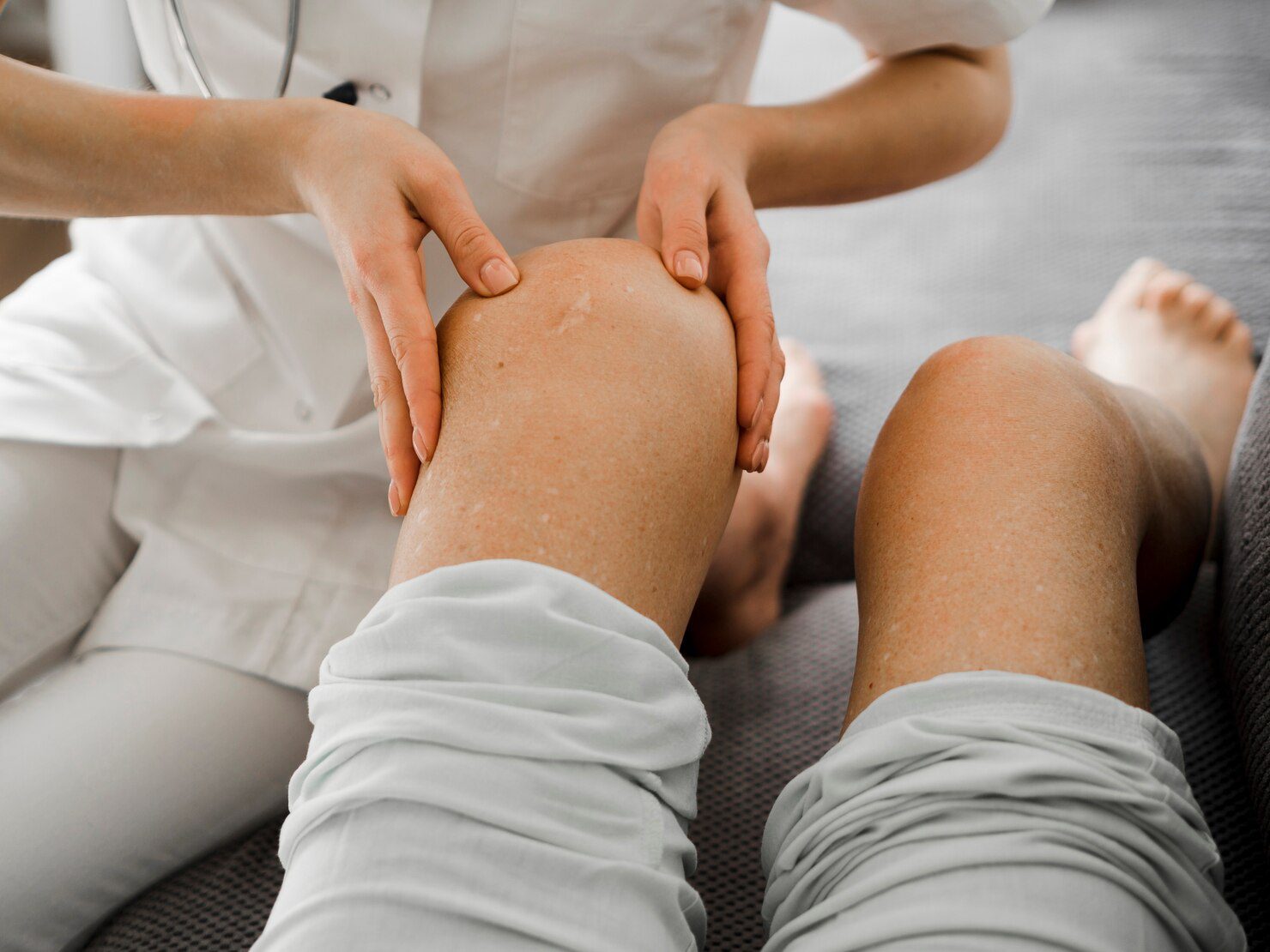
Surgical knee fusion may be advised as an alternative to total knee replacement when the latter has failed or is unsuitable due to extensive knee damage. In such cases, knee fusion helps eliminate pain and instability while also reducing the risk of ongoing or recurrent infection within the knee joint.
Infection
In addition to failed total knee replacement, infection within the knee joint is another common reason for performing knee arthrodesis. Such infections often develop from open wounds that become septic, frequently following previous knee surgery. Severe infections can lead to significant joint damage, pain, and loss of function. Knee fusion is therefore recommended to eliminate infection, relieve pain, and restore stability to the joint.
Tumours
One of the most common sites for bone tumours is within the knee joint. These tumours can lead to severe pain, local tissue invasion, joint dysfunction, bone weakening, cell death, and even fractures. During knee fusion surgery, tumours located at the lower end of the femur (thigh bone) and the upper end of the tibia (shin bone) are typically removed, and the remaining bone ends are fused together to maintain as much joint function as possible. In cases where the tumour has spread extensively, amputation may be the more appropriate surgical option.
Trauma
In cases of severe trauma that result in irreversible damage to the knee joint, knee fusion is often recommended when total knee replacement is no longer a viable option. It serves as a more functional alternative to amputation, helping to eliminate pain, stabilise the joint, and preserve as much leg function as possible.
Osteoarthritis
Typically, total knee replacement is the preferred treatment for severe osteoarthritis of the knee. However, in certain cases where osteoarthritis or other degenerative conditions such as rheumatoid, tuberculous, or inflammatory arthritis have caused extensive joint damage, knee fusion may be a more suitable option. In such situations, where there is severe pain, instability, deformity, and loss of function, knee fusion provides a rigid but stable, painless, and functional knee joint.
Surgical Procedure
During knee fusion surgery, the damaged surfaces of the femur (thigh bone) and tibia (shin bone) are carefully removed along with the ligaments, menisci, and the synovial joint lining. The remaining bone ends are then prepared and fixed together to allow fusion, using different surgical methods depending on the individual case. Techniques commonly used include intramedullary nailing, where a metal rod is inserted through the center of the bones to stabilize them; external fixation, which involves a frame and pins outside the leg to hold the bones in position; and compression plating, where metal plates and screws are attached to maintain alignment and pressure at the fusion site. In some cases, bone grafting may also be performed to fill gaps, enhance stability, and encourage bone growth between the femur and tibia.
- Intramedullary nailing – a metal rod is inserted through the bone marrow cavity of the femur and tibia to hold them firmly together until fusion occurs.
- External fixation – an external metal frame with pins is attached to the bones through the skin to keep them compressed and stable during healing.
- Compression plating – metal plates and screws are fixed along the bones to apply compression across the fusion site and maintain alignment.
- Bone grafting – bone grafts (either from the patient or a donor) may be used to fill gaps, enhance stability, and promote bone healing between the femur and tibia.
Additionally, in some cases, a combination of these surgical techniques may be used to achieve optimal stability and fusion. The choice of method largely depends on the pre-existing condition of the knee joint, the extent of damage, and the underlying reason for performing the knee fusion surgery. Following knee arthrodesis, the leg typically becomes rigid, slightly shorter, and remains in a straight position. However, in certain cases, the surgeon may fuse the knee with a slight bend to improve functional activities such as sitting, walking, and climbing stairs, providing better overall comfort and mobility.
Knee fusion surgery is an uncommon procedure, usually recommended when the knee joint has suffered irreversible damage. The aim is to achieve a stable, pain-free, and functional limb. The success of the surgery largely depends on the quality of the remaining bone and how effectively the bones are aligned and secured using internal or external screws, pins, or plates.
Physiotherapy plays a crucial role after knee fusion surgery to ensure optimal recovery, reduce the risk of future complications, and help patients adapt effectively to their newly fused knee.
Symptoms after knee fusion surgery
After undergoing knee fusion surgery, it is normal to experience pain and swelling around the operated knee due to the surgical procedure. Your leg will be kept elevated to improve circulation and reduce swelling. Because the joint is fused, the knee will remain rigid and unable to bend. To ensure proper healing and protection, your leg will be supported in a long leg cast that immobilises the joint. Within a few days, you may be encouraged to move around with the help of elbow crutches. The hospital stay typically lasts between one and two weeks, though this may vary depending on your individual recovery. After discharge, you will continue wearing the long leg cast and remain non-weight-bearing for up to 12 weeks to allow the bones to fuse and heal properly. Once the fusion is stable, the cast will be replaced with a knee brace, and you will begin partial weight-bearing before gradually progressing to full weight-bearing. Driving is generally not recommended during this period. Physiotherapy begins immediately after surgery to support circulation and muscle conditioning, with a more comprehensive rehabilitation programme introduced once the knee has fully fused—usually after about 12 weeks.
Physiotherapy after knee fusion surgery
Physiotherapy is essential after knee fusion surgery to help you adapt and become comfortable with your newly fused knee. A comprehensive physiotherapy programme with acephysiosports.com provides the guidance and support needed for a smooth recovery. The primary goal of your physiotherapy sessions will be to strengthen the muscles surrounding the knee, hip, ankle, and leg to enhance overall stability and ensure your leg functions as effectively as possible after surgery.
Early stages (1-12)
In the early stages following your knee fusion surgery, physiotherapy focuses on reducing pain and swelling while minimising the risk of post-surgical complications. During this period, you will still be wearing a long leg cast to allow proper bone fusion and healing, so physiotherapy activities will be limited. At acephysiosports.com , your physiotherapist will guide you through gentle exercises designed to strengthen the muscles around your hip, ankle, and opposite leg. These exercises provide essential support while your leg remains in the cast and continue to aid recovery once it has been removed. Physiotherapy at this stage also aims to help you stay as mobile as possible, promoting healthy circulation in the affected leg and throughout the body. Maintaining good blood flow is vital for preventing complications such as deep vein thrombosis (DVT), infection, and bone cell death. Your early-stage physiotherapy programme may include:
- Gentle ankle pumps and circles to promote circulation and reduce swelling
- Isometric contractions for the thigh and hip muscles to maintain strength
- Static quadriceps and gluteal strengthening exercises
- Active range of motion exercises for the hip and ankle joints
- Breathing and circulation exercises to prevent chest and vascular complications
- Mobility training and safe use of elbow crutches
- Education on posture, limb elevation, and self-care during recovery
3-6 months
Once your knee has fused and healed adequately, your long leg cast will be removed and replaced with a knee brace to provide continued protection and support. At this stage, your physiotherapy programme with acephysiosports.com will focus on gradually progressing your weight-bearing ability — from non-weight-bearing to partial, and eventually to full weight-bearing, as tolerated. Your physiotherapist will also continue working on strengthening the muscles around your affected knee, hip, ankle, and your unaffected leg to ensure balanced support. Additional goals during this phase include gait re-education and proprioception (balance) training to enhance your functional abilities and help you adapt effectively to your fused knee. Your physiotherapy with acephysiosports.com will continue to provide expert guidance, reassurance, and ongoing support as you regain strength and confidence in your mobility. Your physiotherapy programme at this stage may include:
- Progressive weight-bearing exercises under physiotherapist supervision
- Gait re-education to improve walking pattern and efficiency
- Proprioception and balance training to enhance joint stability
- Strengthening exercises for the quadriceps, hamstrings, glutes, and calf muscles
- Stretching and mobility work for surrounding joints (hip and ankle)
- Core stability and posture correction exercises
- Endurance and cardiovascular conditioning using low-impact techniques
- Functional training to restore confidence in daily activities
6 months onwards
After around six months of consistent physiotherapy with acephysiosports.com , your rehabilitation will focus on ensuring optimal function in your affected leg. Your physiotherapy programme will continue to build on the exercises from earlier stages while introducing more advanced, functionally specific activities to enhance cardiovascular fitness and overall mobility. By this stage, you should be fully weight-bearing and increasingly comfortable with your fused knee. You will be encouraged to gradually participate in more physically demanding activities, as tolerated and approved by your physiotherapist. The continued emphasis on gait re-education and proprioception (balance) training remains essential to improve stability, coordination, and long-term confidence in movement. Your physiotherapy programme during this stage may include:
- Continuation of strengthening and flexibility exercises from previous stages
- Advanced gait and balance training for improved mobility and stability
- Functional movement exercises to restore confidence in everyday activities
- Low-impact cardiovascular conditioning (e.g., cycling, swimming, or elliptical training)
- Progressive resistance training to enhance overall strength and endurance
- Core and posture-focused exercises to support proper alignment
- Education on long-term self-management, lifestyle adaptation, and activity modification
The success and speed of your recovery following knee fusion surgery largely depend on the condition of your knee joint before the procedure. Equally important is your dedication and consistency in following your comprehensive physiotherapy programme with acephysiosports.com . Your active participation and commitment to rehabilitation will significantly influence how well you adjust to your newly fused knee and the overall effectiveness of your recovery.
Summary
Knee fusion surgery is a necessary procedure performed when the knee joint has sustained irreversible damage, often due to failed knee replacement, severe arthritis, infection, or trauma. The procedure involves fusing the lower end of the thigh bone (femur) with the upper end of the shin bone (tibia) to create a stable, pain-free, and functional limb. During the surgery, the damaged joint surfaces are removed, and the bones are compressed and held together using internal or external plates, screws, or pins — sometimes in combination — to promote fusion. Knee fusion is considered a salvage procedure that can restore stability and eliminate pain when other treatments are no longer viable. Physiotherapy with acephysiosports.com is essential after knee fusion surgery to ensure optimal recovery, prevent complications, and help you adapt effectively to your newly fused knee. A comprehensive and personalised physiotherapy programme will focus on restoring strength, mobility, and function to help you achieve the best possible outcome. For expert post-surgical rehabilitation or to book an appointment, visit acephysiosports.com or contact +65 81535374.
Get treated today!
We have immediate appointments available today. Contact us to make an appointment.
Find out more »
We are open...
Our clinics are open:
Mon - Fri: 8am - 8pm
Sat: 8am - 4pm
Sun: On Appointment Basis
Find your nearest clinic
Acephysio Sports have clinics located throughout the Singapore.
Find out more »

