
Ace Physiotherapy and Sports in Singapore
-
Chat With Us
+65 81535374 -
ACE PHYSIO SPORTS
East gate Building, 46 East Coast Road
#08-03 Singapore 428766 -
Opening Hours
Mon to Fri: 08:00am - 8:00pm -
Opening Hours
Sat: 08:00am - 4:00pm
Sunday (By prior appointment)


- Home
- What We Treat
- Musculoskeletal
- Conditions
- Head
- Neck
- Acute Nerve Root Pain
- Apophyseal Wry Neck
- Broken neck
- Cervical Rib Syndrome
- Cervical Radiculopathy
- Cervical Spondylolythesis
- Cervical Spondylosis
- Cervical Stenosis
- Degenerative Neck Pain
- Discogenic Wry Neck
- Fractured Vertebrae
- Herniated Disc
- Neck Muscular Strain
- Neck Pain
- Neck Slipped Disc
- Postural Kyphosis
- Postural Neck Pain
- Stiff Neck
- Torticollis
- Whiplash
- Shoulder
- Adhesive Capsulitis
- AC Joint Injury
- AC Joint osteolysis
- Calcific Tendinopathy of the Rotator Cuff
- Dislocation of the Shoulder Joint
- Fracture of the Clavicle
- Fractured Humerus
- Frozen Shoulder
- Labral Tear
- Levator Scapulae Syndrome
- Muscle Imbalance
- Nerve Disorders of the Shoulder
- Nerve Entrapments Around the Shoulder
- Referred Pain
- Rotator Cuff Tendinopathy
- Rotator Cuff Tear
- Shoulder Impingement
- Shoulder Instability
- Thoracic Outlet Syndrome
- Winging Scapula
- Upper Arm
- Elbow
- Forearm
- Wrist
- Carpal Tunnel Syndrome
- De Quervain’s Tenosynovitis
- Fracture of the Distal Radius & Ulna
- Fracture of the Scaphoid
- Injury to the Distal Radial Epiphysis
- Osteoarthritis of the Wrist
- Scapholunate Dissociation
- Triangular Fibrocartilage Complex Tear
- Ulnar Nerve Compression at the Wrist
- Wrist Fracture
- Wrist Strain
- Wrist Tendinopathy
- Hand
- Broken Finger
- Crush Injury
- Dislocated Finger
- Duprytren’s Contracture
- Finger Sprain
- Fractured Thumb
- Fracture of the Hook of Hamate
- Hyperextension Injury
- Ligament Injuries in the Fingers
- Metacarpal Fracture
- Nerve Injury
- Osteoarthritis of the Hand
- Referred Pain
- Skier’s Thumb
- Tendon Injury
- Trigger Finger
- Upper Back
- Lower Back
- Buttock
- Chest
- Abdominals
- Pelvis
- Hip
- Groin
- Upper Leg
- Avulsion Fracture of the Ischial Tuberosity
- Dead Leg
- Fractured Femur
- Hamstring Origin Tendinopathy
- Iliotibial Band Syndrome
- Myositis Ossificans
- Pulled Hamstring
- Pulled Quadricep Muscle
- Referred Pain
- Ruptured Hamstring
- Ruptured Quadricep
- Sciatica
- Stress Fracture of the Femur
- Upper Leg Compartment Syndrome
- Knee
- Knee Ligament Injury
- Anterior Cruciate Ligament Rupture
- Anterior Cruciate Ligament Tear
- Calcification of the Medial Collateral Ligament
- Knee Ligament Injury
- Lateral Collateral Ligament Tear
- Medial Collateral Ligament Tear
- Multiple Ligament Injury
- Posterior Cruciate Ligament Tear
- Posterior Cruciate Ligament Rupture
- Posterior Corner Knee Injury
- Patella Conditions
- Knee Tendinopathy
- Chondral Defects
- Fracture of the Femoral Condyles
- Fracture of the Tibial Plateau
- Iliotibial Band Syndrome
- Knee Cartilage Injury
- Meniscal Tear
- Osgood Schlatter’s Disease
- Osteoarthritis of the Knee
- Osteochondritis Dissecans
- Pain at the Front of the Knee
- Pes Anserinus Bursitis
- Popliteus Strain
- Referred Pain
- Ruptured Hamstring Tendon
- Sciatica
- Superior Tibiofibular Joint Injury
- Swimmer’s Knee
- Knee Ligament Injury
- Lower Leg
- Ankle
- Achilles Tendonitis
- Ankle Instability
- Ankle Ligament Injury
- Anterior Impingement Syndrome
- Avulsion Fracture of the Base of the Fifth Metatarsal
- Complete Tear of the Achilles Tendon
- Dislocation of the Peroneal Tendons
- Flexor Hallucis Longus Tendinopathy
- Footballer’s Ankle
- Fractured Ankle
- Inferior Tibiofibular Joint Injury
- Osteoarthritis of the Ankle
- Osteochondral Fracture of the Talar Dome
- Paratendinopathy of the Achilles Tendon
- Partial Tear of the Achilles Tendon
- Peroneal Tendinopathy
- Posterior Impingement Syndrome
- Retrocalcaneal Bursitis
- Sciatica
- Sever’s Disease
- Sinus Tarsi Syndrom
- Sprained Ankle
- Stress Fracture of the Medial Malleolus
- Stress Fracture of the Talus
- Tarsal Tunnel Syndrome
- Tibialis Anterior Tendinopathy
- Tibialis Posterior Tendinopathy
- Foot
- Accessory Navicular Syndrome
- Big Toe Sprain
- Biomechanical Foot Pain
- Bunions
- Extensor Tendinopathy
- Fat Pad Contusion
- Fractures of the Fifth Metatarsal
- Hallux Rigidus
- Lisfranc Injury
- Medial Plantar Neuropraxia
- Metatarsalgia
- Midtarsal Joint Sprain
- Morton’s Neuroma
- Osteoarthritis of the Foot
- Osteochondral Lesions of the Talus
- Os Trigonum Syndrome
- Plantar Fasciitis
- Sciatica
- Sesamoid Injury
- Sesamoiditis
- Stress Fracture of the Calcaneus
- Stress Fracture of the Metatarsal
- Stress Fracture of the Navicular
- Turf Toe
- Symptoms
- Abnormal Reflexes
- Balance Problems
- Biomechanical Problems
- Coordination Problems
- Cramps
- Deformity
- Falls
- Fatigue
- Gait problems
- Headaches
- Hypermobility
- Immobility
- Joint Clicking
- Joint Instability
- Joint Locking
- Mobility Problems
- Movement Disorders
- Numbness
- Pain
- Reduced Range of Movement
- Sensory Problems
- Shortness of Breath
- Spasm
- Stiffness
- Swelling / Inflammation
- Tingling / Pins & Needles
- Weakness
- Conditions
- Sports Injuries
- Postoperative Orthopaedic
- Shoulder
- Anterior Inferior Capsular Shift
- AC Joint / Clavicle Excision
- AC Joint Stabilisation
- Arthroscopy
- Bankart Repair / Anterior Stabilisation
- Biceps Tendon Repair
- Capsular Shrinkage
- Fractured Clavicle Fixation
- Fractured Humerus Fixation
- Frozen Shoulder Release – Arthroscopic Release of the Coraco-Humeral Ligament
- Hemiarthroplasty
- Long Thoracic Nerve Release
- Mobilisation Under Anaesthetic MUA
- Rotator Cuff Surgery (Repair & Debridement)
- Shoulder Replacement
- SLAP Repair
- Steroid Injection of the Shoulder
- Sub Acromial Decompression
- Neck
- Upper Arm
- Forearm
- Elbow
- Upper Back
- Lower Back
- Buttock
- Pelvis
- Hip
- Groin
- Ankle
- Foot
- Knee
- Anterior Cruciate Ligament (ACL)
- Arthroscopy
- Knee Fusion
- Knee Replacement
- Lateral Collateral Ligament (LCL)
- Lateral Release
- Medial Collateral Ligament (MCL)
- Meniscus Repair
- Meniscus Replacement / Transplant
- Meniscectomy
- Micro-Fracture of an Osteochondral Lesion
- Multi Ligament Surgery
- ORIF Patella
- Osteotomy
- Partial Knee Resurfacing
- Patella Stabilisation
- Patella Tendon Repair
- Patellar Alignment Surgery
- Patellectomy
- Posterior Corner Reconstruction
- Posterior Cruciate Ligament (PCL)
- Tibial Plateau Fracture
- Shoulder
- Neurological
- Chronic Pain/Fatigue
- Amputees
- Rheumatology
- Women’s Health
- Respiratory
- Cardiovascular
- Elderly
- Oncology
- Men’s Health
- Vestibular
- Musculoskeletal
- Gallery
- About
Anterior Cruciate Ligament (ACL)
ACL Surgery Physiotherapy
Anterior cruciate ligament (ACL) surgery involves the reconstruction or repair of the ACL ligament, which may be necessary following an injury or tear caused by sports activities, trauma, or a fall.
If the ACL is torn, one of the primary issues experienced is knee weakness and instability—often described as the knee “giving way.” ACL surgery helps restore stability, improve knee function, and prevent further damage such as recurrent injuries or the development of arthritis.
Additionally, ACL surgery can restore the knee to near-normal function, enabling you to return to everyday activities, work, exercise, hobbies, and even high-level sporting pursuits with greater confidence and stability.
The goal of ACL reconstruction surgery is to replace the torn ligament with a graft taken from another tendon. These grafts may come from your own body (autograft) or from a donor (allograft). Artificial grafts may also be considered in certain cases. The common surgical options include:
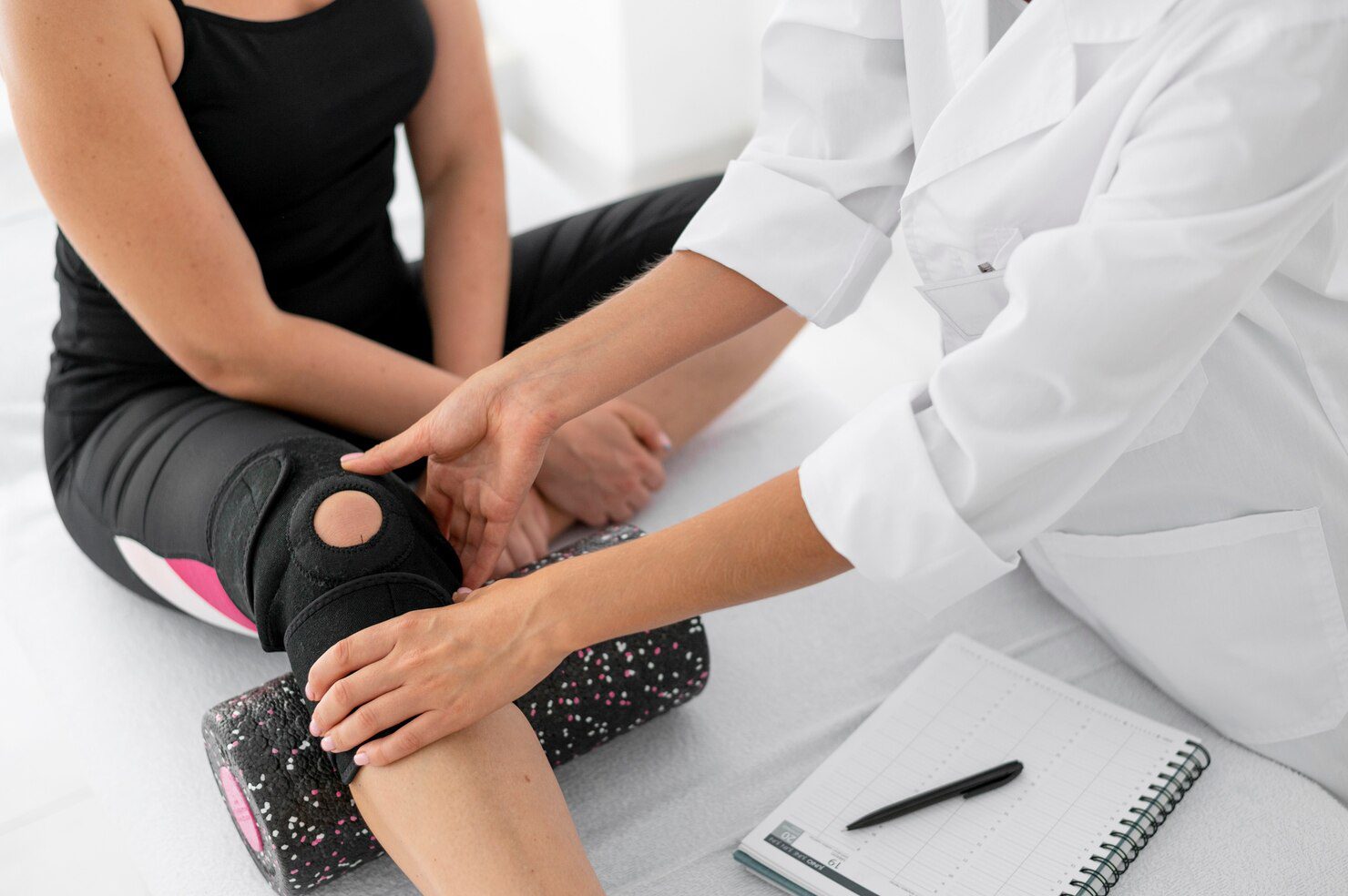
ACL surgery options:
Autograft: Using the patient’s own tissue, commonly from the patellar tendon, hamstring tendon, or quadriceps tendon.
Allograft: Using donor tissue taken from another person (a cadaver).
Synthetic graft: Using an artificial ligament made from synthetic materials (used less frequently today).
Combined grafts: A combination of autograft and synthetic materials for additional support in specific cases.
Physiotherapy for ACL surgery
Pre surgery physiotherapy
At acephysiosports.com, we recommend beginning pre-operative physiotherapy as soon as possible after sustaining an ACL injury to optimise your recovery and surgical outcome. The main goals of pre-surgery physiotherapy are to regain maximum range of movement in the knee joint, reduce pain and swelling, and achieve full or near-full weight bearing before the operation. Strengthening the muscles surrounding the knee is essential to improve joint stability, while additional strengthening of the hip and ankle muscles helps compensate for the temporary loss of knee function. Through a combination of targeted stretching and strengthening exercises, our physiotherapists at acephysiosports.com will ensure your knee is in the best possible condition before surgery, helping to speed up your post-operative recovery.
Symptoms post surgery
Immediately after ACL surgery, you are likely to experience pain, swelling, reduced mobility, stiffness, muscle weakness, loss of proprioception (balance), and decreased muscle control in and around the knee. These symptoms are normal and part of the early healing process. Following the procedure, you will be unable to drive and will be provided with elbow crutches to assist with mobility. In some cases, a knee splint may also be prescribed to provide comfort and restrict movement, ensuring optimal protection for the knee during the initial recovery phase after surgery.
Post surgery physiotherapy
A physiotherapy rehabilitation programme after ACL surgery is essential to help you regain full function of your knee. In the early stages of recovery, the main goals are to reduce pain and swelling, restore full range of motion, and improve your ability to bear weight safely and comfortably. As your recovery progresses, your rehabilitation programme with acephysiosports.com will focus on restoring pre-injury function by strengthening the muscles around your knee, ankle, and hip joints. Treatment will also work on improving joint proprioception (balance), gait, and muscle endurance to support full recovery. In the long term, after your ACL surgery, acephysiosports.com aims to help you return to your pre-injury condition through a personalised exercise plan tailored to your job, hobbies, and sporting activities.
Treatments included in rehabilitation post ACL surgery:
Day 1-Discharge
In the first few days after ACL reconstruction, the main goals are to reduce inflammation, pain, and discomfort. This can be achieved through regular icing, keeping the knee elevated, and using elbow crutches to limit weight-bearing. For additional support and protection, some surgeons may also recommend using a brace or cricket splint in the early stages following your ACL surgery to help stabilise the knee and prevent complications.
0-4 weeks
During the first month after ACL surgery, the main goals of rehabilitation are to promote early function and increase the range of movement in your knee. Early physiotherapy also focuses on gradually encouraging weight bearing and improving muscle strength and endurance to support recovery and prevent stiffness or muscle wasting.
Early exercises will include
- Gentle range of motion exercises
- Isometric quadriceps contractions
- Ankle pumps to improve circulation
- Straight leg raises
- Heel slides to increase knee flexibility
- Hip abduction and adduction exercises
- Patellar (kneecap) mobilization exercises to prevent stiffness
4-8 weeks
Between 4 to 8 weeks after ACL surgery, the main focus of rehabilitation is on progressing functional activities while preventing joint stiffness, pain at the front of the knee, and scar tissue adherence. During this phase, physiotherapy also aims to improve proprioception (balance and joint awareness), maintain cardiovascular fitness, and further develop muscle strength, power, and endurance to support knee stability and movement.
Exercises include:
- Stationary cycling to improve knee mobility and endurance
- Step-ups and step-downs to enhance leg strength and control
- Balance board or wobble cushion exercises to improve proprioception
- Leg presses within a safe range to build quadriceps and hamstring strength
- Bridging exercises to strengthen gluteal and core muscles
- Gentle resistance band exercises for overall lower limb conditioning
8-12 weeks
The main goals of rehabilitation at 8–12 weeks post ACL surgery are to further improve functional movement, muscle strength, and neuromuscular control. Exercises from earlier stages are continued and progressively intensified to challenge endurance and coordination. At this point, greater emphasis is placed on strengthening the lower limb muscles, refining walking (gait) patterns, and enhancing balance and proprioception to prepare for a gradual return to more demanding physical activities.
12-16 weeks
The main goals of rehabilitation between 12–16 weeks post ACL surgery are to further enhance muscle strength, control, balance, and overall cardiovascular fitness while refining gait and coordination. During this phase, early sports-specific activities can be gradually introduced under physiotherapy guidance. The focus should be on progressive exercises that simulate functional movements and prepare the knee for higher levels of activity and performance.
3-6 months
At this stage, the primary goals are focused on promoting exercises tailored to specific functional and sporting activities. However, it is important to note that some movements or activities may still be restricted if the knee has not fully recovered, even if it feels normal. As rehabilitation progresses, the focus will shift towards preparing both the physical and psychological readiness required to safely and confidently return to full, unrestricted activity.
6-12 months
In the later stages of rehabilitation following ACL surgery, the focus shifts towards achieving unrestricted, confident function and advancing sport-specific skills. This phase emphasizes refining performance, improving agility, and ensuring full strength and stability of the knee. It also marks the earliest possible return to contact sports, provided you can train without pain, instability, or any residual complications.
Success of rehabilitation
The decision to return to unrestricted activities or sports after ACL surgery depends on several key factors, including:
- Full range of motion in the knee without pain or stiffness.
- Adequate muscle strength and endurance, particularly in the quadriceps and hamstrings.
- Good balance and proprioception to maintain joint stability during movement.
- Absence of swelling or inflammation around the knee joint.
- Confidence in movement without any fear of re-injury.
- Approval from your surgeon and physiotherapist after clinical assessment and functional testing.
Summary
ACL surgery is essential to regain stability and full function in your knee while also helping to prevent further injuries or damage. ACL surgery offers a near-normal knee that allows you to return to your everyday activities, work, hobbies, and sports. What’s more, acephysiosports.com highly recommends a physiotherapy rehabilitation program after ACL surgery to ensure full recovery of your knee’s function, enabling you to return to what you love doing most as quickly as possible. Call acephysiosports.com on +65 81535374 to book your appointment today!
Get treated today!
We have immediate appointments available today. Contact us to make an appointment.
Find out more »
We are open...
Our clinics are open:
Mon - Fri: 8am - 8pm
Sat: 8am - 4pm
Sun: On Appointment Basis
Find your nearest clinic
Acephysio Sports have clinics located throughout the Singapore.
Find out more »

