
Ace Physiotherapy and Sports in Singapore
-
Chat With Us
+65 81535374 -
ACE PHYSIO SPORTS
East gate Building, 46 East Coast Road
#08-03 Singapore 428766 -
Opening Hours
Mon to Fri: 08:00am - 8:00pm -
Opening Hours
Sat: 08:00am - 4:00pm
Sunday (By prior appointment)


- Home
- What We Treat
- Musculoskeletal
- Conditions
- Head
- Neck
- Acute Nerve Root Pain
- Apophyseal Wry Neck
- Broken neck
- Cervical Rib Syndrome
- Cervical Radiculopathy
- Cervical Spondylolythesis
- Cervical Spondylosis
- Cervical Stenosis
- Degenerative Neck Pain
- Discogenic Wry Neck
- Fractured Vertebrae
- Herniated Disc
- Neck Muscular Strain
- Neck Pain
- Neck Slipped Disc
- Postural Kyphosis
- Postural Neck Pain
- Stiff Neck
- Torticollis
- Whiplash
- Shoulder
- Adhesive Capsulitis
- AC Joint Injury
- AC Joint osteolysis
- Calcific Tendinopathy of the Rotator Cuff
- Dislocation of the Shoulder Joint
- Fracture of the Clavicle
- Fractured Humerus
- Frozen Shoulder
- Labral Tear
- Levator Scapulae Syndrome
- Muscle Imbalance
- Nerve Disorders of the Shoulder
- Nerve Entrapments Around the Shoulder
- Referred Pain
- Rotator Cuff Tendinopathy
- Rotator Cuff Tear
- Shoulder Impingement
- Shoulder Instability
- Thoracic Outlet Syndrome
- Winging Scapula
- Upper Arm
- Elbow
- Forearm
- Wrist
- Carpal Tunnel Syndrome
- De Quervain’s Tenosynovitis
- Fracture of the Distal Radius & Ulna
- Fracture of the Scaphoid
- Injury to the Distal Radial Epiphysis
- Osteoarthritis of the Wrist
- Scapholunate Dissociation
- Triangular Fibrocartilage Complex Tear
- Ulnar Nerve Compression at the Wrist
- Wrist Fracture
- Wrist Strain
- Wrist Tendinopathy
- Hand
- Broken Finger
- Crush Injury
- Dislocated Finger
- Duprytren’s Contracture
- Finger Sprain
- Fractured Thumb
- Fracture of the Hook of Hamate
- Hyperextension Injury
- Ligament Injuries in the Fingers
- Metacarpal Fracture
- Nerve Injury
- Osteoarthritis of the Hand
- Referred Pain
- Skier’s Thumb
- Tendon Injury
- Trigger Finger
- Upper Back
- Lower Back
- Buttock
- Chest
- Abdominals
- Pelvis
- Hip
- Groin
- Upper Leg
- Avulsion Fracture of the Ischial Tuberosity
- Dead Leg
- Fractured Femur
- Hamstring Origin Tendinopathy
- Iliotibial Band Syndrome
- Myositis Ossificans
- Pulled Hamstring
- Pulled Quadricep Muscle
- Referred Pain
- Ruptured Hamstring
- Ruptured Quadricep
- Sciatica
- Stress Fracture of the Femur
- Upper Leg Compartment Syndrome
- Knee
- Knee Ligament Injury
- Anterior Cruciate Ligament Rupture
- Anterior Cruciate Ligament Tear
- Calcification of the Medial Collateral Ligament
- Knee Ligament Injury
- Lateral Collateral Ligament Tear
- Medial Collateral Ligament Tear
- Multiple Ligament Injury
- Posterior Cruciate Ligament Tear
- Posterior Cruciate Ligament Rupture
- Posterior Corner Knee Injury
- Patella Conditions
- Knee Tendinopathy
- Chondral Defects
- Fracture of the Femoral Condyles
- Fracture of the Tibial Plateau
- Iliotibial Band Syndrome
- Knee Cartilage Injury
- Meniscal Tear
- Osgood Schlatter’s Disease
- Osteoarthritis of the Knee
- Osteochondritis Dissecans
- Pain at the Front of the Knee
- Pes Anserinus Bursitis
- Popliteus Strain
- Referred Pain
- Ruptured Hamstring Tendon
- Sciatica
- Superior Tibiofibular Joint Injury
- Swimmer’s Knee
- Knee Ligament Injury
- Lower Leg
- Ankle
- Achilles Tendonitis
- Ankle Instability
- Ankle Ligament Injury
- Anterior Impingement Syndrome
- Avulsion Fracture of the Base of the Fifth Metatarsal
- Complete Tear of the Achilles Tendon
- Dislocation of the Peroneal Tendons
- Flexor Hallucis Longus Tendinopathy
- Footballer’s Ankle
- Fractured Ankle
- Inferior Tibiofibular Joint Injury
- Osteoarthritis of the Ankle
- Osteochondral Fracture of the Talar Dome
- Paratendinopathy of the Achilles Tendon
- Partial Tear of the Achilles Tendon
- Peroneal Tendinopathy
- Posterior Impingement Syndrome
- Retrocalcaneal Bursitis
- Sciatica
- Sever’s Disease
- Sinus Tarsi Syndrom
- Sprained Ankle
- Stress Fracture of the Medial Malleolus
- Stress Fracture of the Talus
- Tarsal Tunnel Syndrome
- Tibialis Anterior Tendinopathy
- Tibialis Posterior Tendinopathy
- Foot
- Accessory Navicular Syndrome
- Big Toe Sprain
- Biomechanical Foot Pain
- Bunions
- Extensor Tendinopathy
- Fat Pad Contusion
- Fractures of the Fifth Metatarsal
- Hallux Rigidus
- Lisfranc Injury
- Medial Plantar Neuropraxia
- Metatarsalgia
- Midtarsal Joint Sprain
- Morton’s Neuroma
- Osteoarthritis of the Foot
- Osteochondral Lesions of the Talus
- Os Trigonum Syndrome
- Plantar Fasciitis
- Sciatica
- Sesamoid Injury
- Sesamoiditis
- Stress Fracture of the Calcaneus
- Stress Fracture of the Metatarsal
- Stress Fracture of the Navicular
- Turf Toe
- Symptoms
- Abnormal Reflexes
- Balance Problems
- Biomechanical Problems
- Coordination Problems
- Cramps
- Deformity
- Falls
- Fatigue
- Gait problems
- Headaches
- Hypermobility
- Immobility
- Joint Clicking
- Joint Instability
- Joint Locking
- Mobility Problems
- Movement Disorders
- Numbness
- Pain
- Reduced Range of Movement
- Sensory Problems
- Shortness of Breath
- Spasm
- Stiffness
- Swelling / Inflammation
- Tingling / Pins & Needles
- Weakness
- Conditions
- Sports Injuries
- Postoperative Orthopaedic
- Shoulder
- Anterior Inferior Capsular Shift
- AC Joint / Clavicle Excision
- AC Joint Stabilisation
- Arthroscopy
- Bankart Repair / Anterior Stabilisation
- Biceps Tendon Repair
- Capsular Shrinkage
- Fractured Clavicle Fixation
- Fractured Humerus Fixation
- Frozen Shoulder Release – Arthroscopic Release of the Coraco-Humeral Ligament
- Hemiarthroplasty
- Long Thoracic Nerve Release
- Mobilisation Under Anaesthetic MUA
- Rotator Cuff Surgery (Repair & Debridement)
- Shoulder Replacement
- SLAP Repair
- Steroid Injection of the Shoulder
- Sub Acromial Decompression
- Neck
- Upper Arm
- Forearm
- Elbow
- Upper Back
- Lower Back
- Buttock
- Pelvis
- Hip
- Groin
- Ankle
- Foot
- Knee
- Anterior Cruciate Ligament (ACL)
- Arthroscopy
- Knee Fusion
- Knee Replacement
- Lateral Collateral Ligament (LCL)
- Lateral Release
- Medial Collateral Ligament (MCL)
- Meniscus Repair
- Meniscus Replacement / Transplant
- Meniscectomy
- Micro-Fracture of an Osteochondral Lesion
- Multi Ligament Surgery
- ORIF Patella
- Osteotomy
- Partial Knee Resurfacing
- Patella Stabilisation
- Patella Tendon Repair
- Patellar Alignment Surgery
- Patellectomy
- Posterior Corner Reconstruction
- Posterior Cruciate Ligament (PCL)
- Tibial Plateau Fracture
- Shoulder
- Neurological
- Chronic Pain/Fatigue
- Amputees
- Rheumatology
- Women’s Health
- Respiratory
- Cardiovascular
- Elderly
- Oncology
- Men’s Health
- Vestibular
- Musculoskeletal
- Gallery
- About
Arthroscopic Debridement
Arthroscopy is a form of keyhole surgery in which a small telescope is inserted into the joint through tiny incisions to ‘wash out’ loose or damaged tissue that may be causing pain or discomfort. Arthroscopic debridement refers specifically to the treatment of joints affected by mild arthritis, involving the removal of damaged cartilage or extra bone growths that may have developed over time. Debridement of the ankle focuses on tidying up the joint to improve movement and reduce symptoms. In some cases, inflammation (swelling) within the joint may also be removed to relieve stiffness or pain. The excess bone growth, known as an osteophyte, can often cause a grating or clicking sensation when moving the ankle joint. Whenever possible, ankle arthroscopy is preferred over open ankle surgery (such as joint fusion), as it causes less trauma, reduces infection risk, and allows for a faster recovery. Although arthroscopic debridement is most commonly used to treat ankle arthritis, it can also be beneficial for the following conditions:
- Mild to moderate ankle arthritis
- Loose bodies within the joint
- Synovitis (inflammation of the joint lining)
- Osteophyte formation (extra bone growth causing impingement)
- Ankle impingement syndrome
- Cartilage damage or degeneration
- Scar tissue restricting ankle movement
- Unexplained ankle pain or stiffness not relieved by conservative treatment
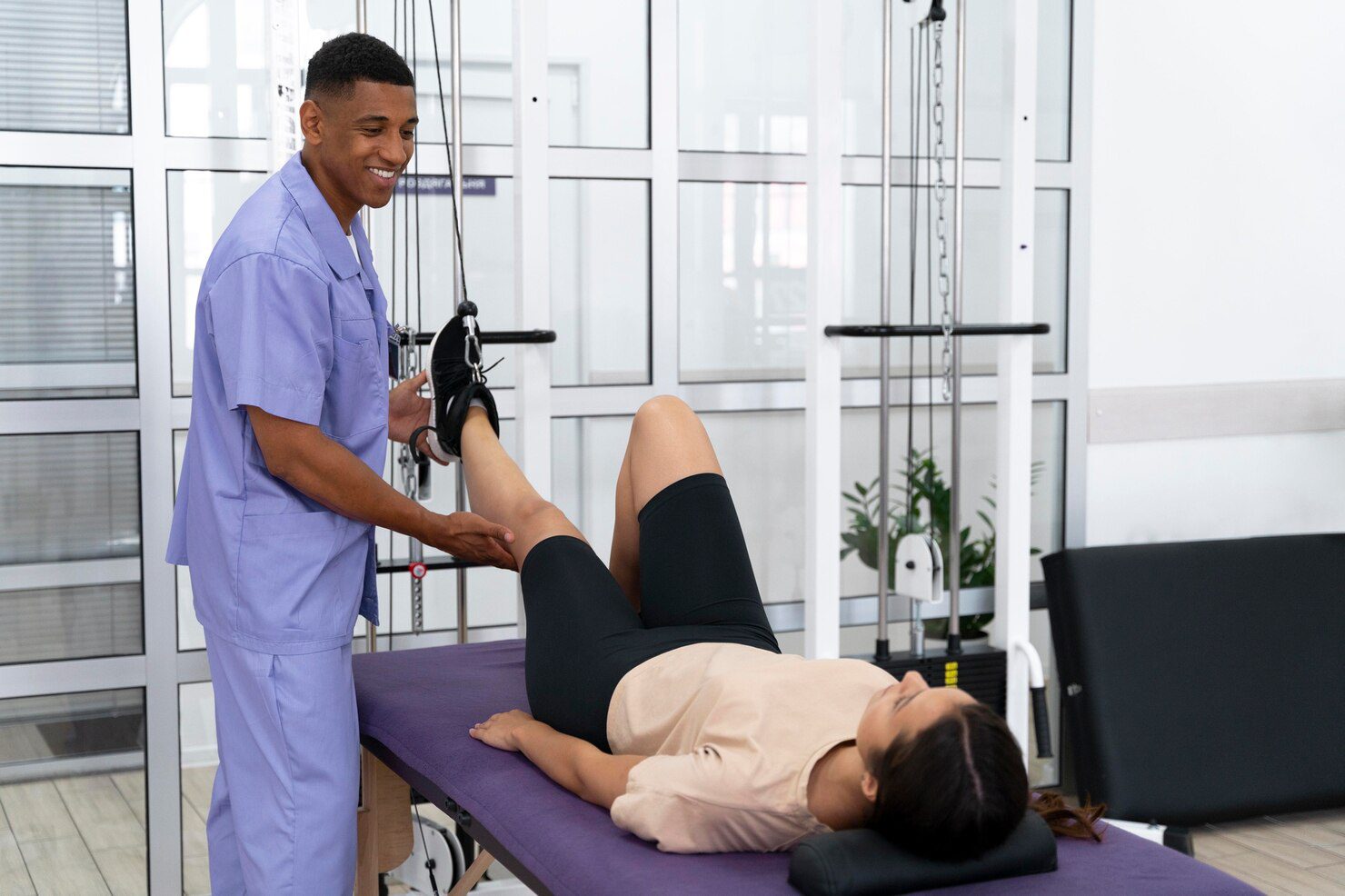
Physiotherapy prior to ankle arthroscopic debridement
This type of surgery is elective (planned), and once you have decided to proceed, you will be placed on a waiting list until a surgery date is confirmed. During this period, it is essential to prepare your ankle joint for the best possible outcome by keeping it mobile, flexible, and strong. A personalised physiotherapy programme designed by Ace Physio Sports will help you prepare effectively for surgery. The programme not only focuses on the affected ankle joint but also aims to strengthen surrounding and supporting joints, helping you maintain your overall function and independence before and after surgery. Physiotherapy before surgery may include:
- Range of motion exercises to maintain joint mobility
- Strengthening exercises for the ankle, foot, and lower limb
- Balance and proprioception training to enhance stability
- Gait training to maintain correct walking patterns
- Education and guidance on post-surgery care and mobility aids
Symptoms after ankle arthroscopic debridement
After your ankle arthroscopic debridement surgery, you will be able to put some weight through the ankle joint within the first few days. Crutches may be used during this time for additional support, and you will gradually progress to full weight-bearing depending on your pain and comfort levels. A bandage will be applied to protect the surgical area immediately after the procedure. This can usually be removed one week after surgery. At around two weeks, your stitches will be removed, and you will be able to get the area wet safely. You will still be encouraged to continue your prescribed physiotherapy exercises, even while the bandage is in place, to maintain movement and prevent stiffness. You may also experience the following symptoms after surgery:
- Mild to moderate pain or discomfort around the ankle
- Swelling and bruising at the surgical site
- Stiffness or a tight feeling in the joint
- Temporary numbness due to local anaesthetic or nerve irritation
- Mild oozing or discharge from the incision sites
Physiotherapy after ankle arthroscopic debridement
Immediately after the operation, you will be able to begin your rehabilitation programme at Ace Physio Sports. During the first few days, while you are not fully weight-bearing, you can perform simple foot and ankle exercises in sitting or lying positions. These early exercises are essential to maintain joint mobility, reduce swelling, and prevent stiffness around the ankle following surgery.
Week 1
After the operation, your ankle joint will be supported with several layers of bandage to protect the area and aid healing. During the first week, the physiotherapy programme designed for you by Ace Physio Sports will focus on gentle, early-stage rehabilitation to promote circulation and reduce swelling. Physiotherapy during the first week may include:
- Gentle range of motion exercises for the foot and ankle
- Elevation and compression techniques to manage swelling
- Isometric strengthening exercises for the calf and lower leg
- Circulatory exercises to prevent stiffness and improve healing
- Guidance on safe mobility and use of crutches, if required
Weeks 2-3
At this stage, you will be fully weight-bearing and no longer require bandages or stitches from the surgery. Physiotherapy will now focus on helping you return to work, sport, and your regular daily activities safely and confidently. Your rehabilitation programme at Ace Physio Sports may include:
- Progressive strengthening exercises for the ankle, foot, and lower limb
- Balance and proprioception training to improve stability and coordination
- Gait retraining to restore a normal walking pattern
- Functional and sport-specific exercises to prepare for your chosen activities
- Manual therapy and stretching to enhance flexibility and reduce residual stiffness
Weeks 4 onwards
You should now have greater strength and improved movement in the affected ankle joint, with significantly reduced pain and discomfort during daily activities. By this stage, you will be able to drive and should have returned to work or normal routines, provided no complications have occurred. If you are involved in competitive or recreational sports, your physiotherapist at Ace Physio Sports will focus on progressively advancing your rehabilitation programme to prepare you for a safe and confident return to sport. Physiotherapy at this stage may include:
- Advanced strengthening and agility exercises
- Dynamic balance and coordination training
- Plyometric and impact-loading drills (if appropriate)
- Sport-specific movement retraining
- Performance conditioning and injury prevention strategies
Summary
Arthroscopic debridement is a form of keyhole surgery designed to remove unwanted material such as cartilage, synovium, or osteophytes from the joint to reduce pain and improve mobility. It is most commonly used for mildly arthritic joints, but can also benefit individuals with joint instability, synovial or cartilage disease, or severe joint inflammation such as rheumatoid arthritis. This procedure has excellent success rates, and with a personalised rehabilitation programme from one of the expert physiotherapists at Ace Physio Sports, you can maximise your recovery, return to work, sport, or hobbies faster, and minimise post-operative complications. To book an appointment or discuss your rehabilitation plan, please contact Ace Physio Sports at +65 81535374
Get treated today!
We have immediate appointments available today. Contact us to make an appointment.
Find out more »
We are open...
Our clinics are open:
Mon - Fri: 8am - 8pm
Sat: 8am - 4pm
Sun: On Appointment Basis
Find your nearest clinic
Acephysio Sports have clinics located throughout the Singapore.
Find out more »

