


Paddle Injuries & Prevention: A Physiotherapist’s Guide
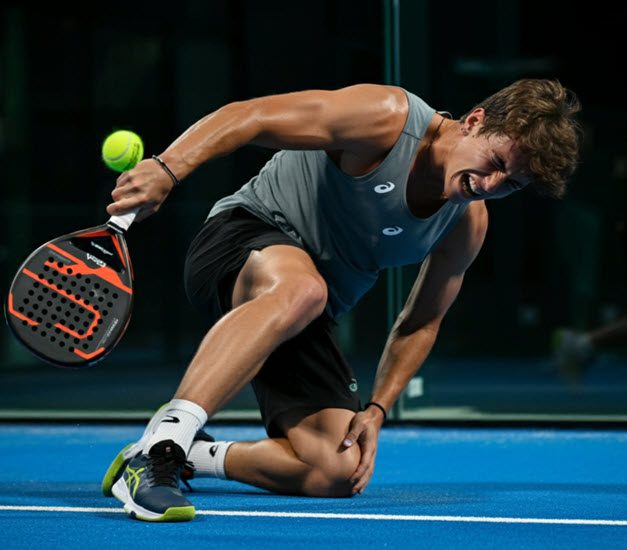
Common Paddle Sports Injuries
Shoulder Injuries
Repetitive overhead strokes and rapid arm movements can overload the shoulder, leading to rotator cuff strain, impingement, or tendon irritation. Poor technique and inadequate strength further increase injury risk.Elbow Pain (Tennis Elbow)
Lateral elbow pain is common in paddle players due to repetitive gripping and wrist extension. Incorrect grip size, poor stroke mechanics, and overuse often contribute to this condition.Wrist and Forearm Strain
Sudden changes in direction and repeated impact can strain the wrist and forearm muscles, especially when players rely heavily on the wrist instead of whole-body movement.Knee Injuries
Paddle sports involve frequent lunging, squatting, and rapid changes in direction, which place high demands on the knees. Common knee conditions include patellar tendon pain, meniscus irritation, and ligament strain, particularly when players lack proper lower limb strength or movement control.
Lower Back Pain
Twisting movements, lunging, and sudden acceleration can place excessive load on the lower back, particularly in players with poor core stability or limited hip mobility.Why Paddle Injuries Occur
- Repetitive movements without adequate recovery
- Poor stroke technique and biomechanics
- Weak shoulder, core, or hip muscles
- Inadequate warm-up and flexibility
- Sudden increase in playing intensity or frequency

Leave a reply
You must be logged in to post a comment.