


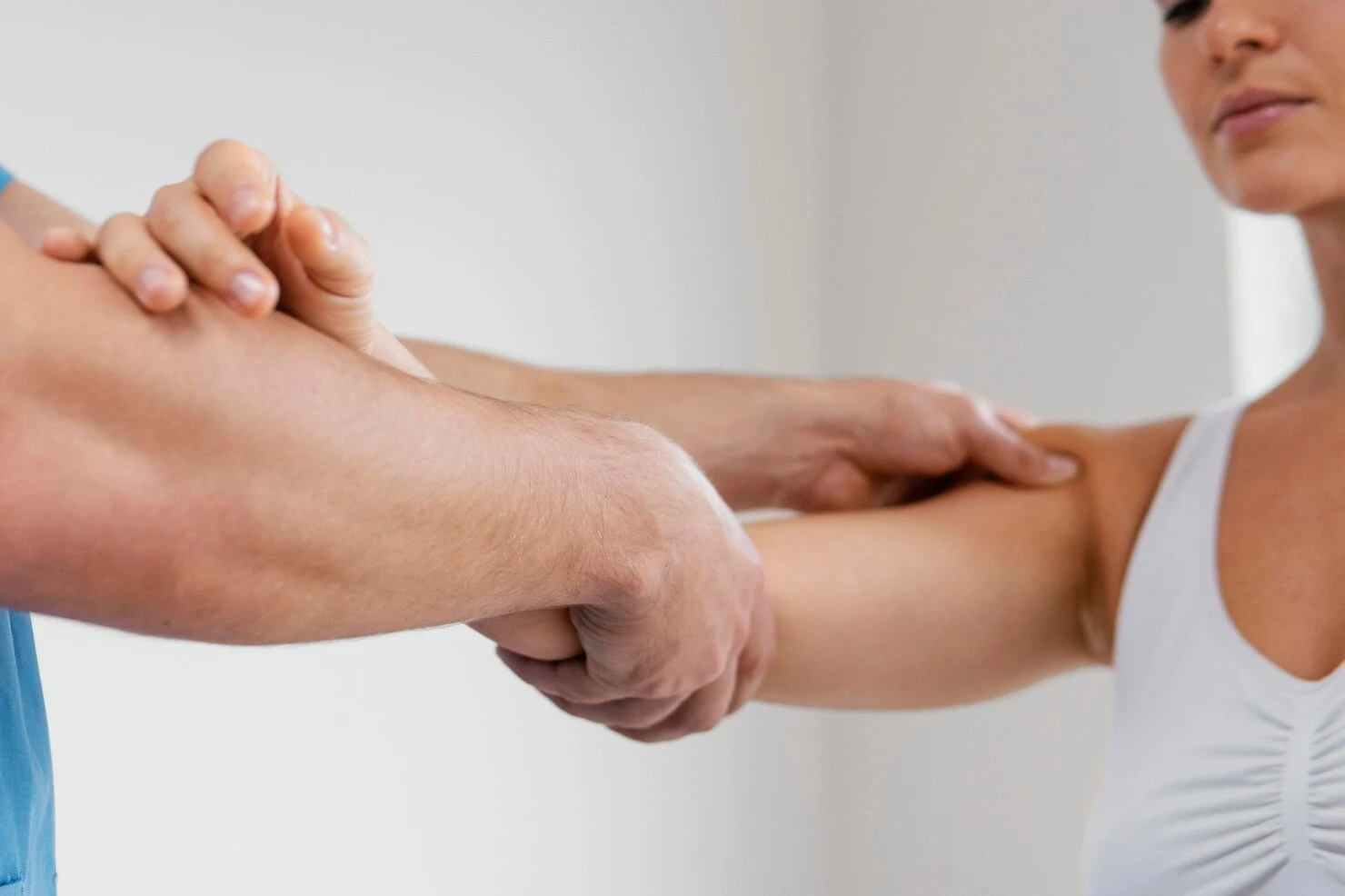
Forearm injuries are frequent among athletes and workers due to repetitive motions, heavy lifting, or sudden impacts. Identifying common musculoskeletal forearm conditions and understanding forearm physiotherapy options can help reduce pain, accelerate recovery, and prevent long-term damage.
What Are the Most Common Forearm Injuries in Sports and Work?
- Forearm muscle strain: Overstretching or tearing of muscles from lifting, gripping, or sudden force
- Tendon injuries: Tendinitis or tennis elbow caused by repetitive motion
- Ligament sprains: Twisting or trauma-related injuries
- Overuse injuries: Chronic pain from repetitive tasks in sports (e.g., tennis, golf) or work (typing, manual labor)
- Nerve compression: Carpal tunnel or radial nerve issues
- Fractures and contusions: From impact or accidents
How Can Forearm Physiotherapy Help?
Forearm physiotherapy focuses on:
- Reducing forearm pain and inflammation
- Restoring mobility and grip strength
- Strengthening muscles to prevent recurrence
- Providing guidance on posture, ergonomics, and proper technique
- Accelerating recovery from forearm muscle strain and other injuries
What Are the Signs That I Need Forearm Physiotherapy?
Seek physiotherapy if you experience:
- Persistent or worsening forearm pain
- Weakness or difficulty gripping tools or sports equipment
- Swelling, tenderness, or bruising in the forearm
- Tingling, numbness, or restricted motion
- Difficulty performing daily activities or sports
What Does Forearm Injury Treatment Involve?
Forearm injury treatment may include:
- Assessment of the musculoskeletal forearm condition
- Manual therapy to relieve pain and improve circulation
- Stretching and strengthening exercises
- Pain management techniques (ice, heat, TENS, ultrasound)
- Education on injury prevention and ergonomics
How Can I Prevent Forearm Injuries at Work or in Sports?
- Perform regular stretching and strengthening exercises
- Use ergonomic tools and maintain proper posture
- Take breaks during repetitive tasks
- Use protective gear for sports activities
- Follow a guided forearm physiotherapy program if recovering from previous injuries
How Long Does Recovery Take for Forearm Muscle Strains or Overuse Injuries?
- Mild strain: 1–3 weeks
- Moderate strain or sprain: 4–6 weeks
- Severe injury or chronic overuse: 8–12 weeks or longer
Forearm physiotherapy ensures safe, structured recovery and minimizes the risk of re-injury.
When Should I Consult a Specialist for Forearm Pain Therapy?
Consult a physiotherapist or doctor if:
- Pain is persistent or worsening
- Swelling or bruising does not improve
- Weakness or numbness affects daily activities
- You experience recurring injuries despite rest
Timely intervention and forearm injury treatment can prevent chronic conditions and help return to sports or work safely.
Final Thoughts
Understanding common musculoskeletal forearm conditions in sports and work is key to maintaining arm strength and preventing injuries. Early intervention with forearm physiotherapy provides effective pain relief, restores mobility, and strengthens the muscles for long-term resilience.




Leave a reply
You must be logged in to post a comment.